How an Endoscopy Clinic Singapore Helps Detect Early Gastric and Pancreatic Conditions
Early diagnosis plays a critical role in gastrointestinal health, particularly when it comes to gastric and pancreatic conditions, where symptoms in the early stages are often subtle or easily overlooked. Many patients may experience vague complaints such as bloating, mild upper abdominal discomfort, loss of appetite, or intermittent indigestion, which are frequently mistaken for dietary issues or stress.
However, these seemingly minor symptoms can sometimes indicate underlying conditions that require timely investigation. This is where an endoscopy clinic Singapore becomes essential, offering direct visual assessment of the digestive tract to detect abnormalities that may not be identified through routine screening or imaging alone.
By facilitating early and accurate evaluation, an endoscopy clinic in Singapore plays a vital role in identifying potential issues before they progress into more serious or advanced disease stages, ultimately improving treatment outcomes and patient prognosis.
What an Endoscopy Clinic Does
An endoscopy clinic Singapore provides specialised diagnostic services that are particularly important in evaluating complex upper abdominal and pancreatic conditions. While gastroscopy is used to examine the oesophagus and stomach, more advanced techniques such as endoscopic ultrasound (EUS) are often central when there is a need to assess the pancreas in greater detail. The pancreas is a deep-seated organ, and early abnormalities such as small tumours, cysts, or subtle signs of inflammation are often difficult to detect using standard imaging alone.
In this context, an endoscopy clinic Singapore equipped with EUS capability allows doctors to obtain high-resolution images from within the body, offering a much closer and clearer view of the pancreas and surrounding structures. This enables earlier identification of potentially serious pancreatic conditions, supporting timely diagnosis and management before symptoms become more advanced.
Detecting Early Gastric Conditions
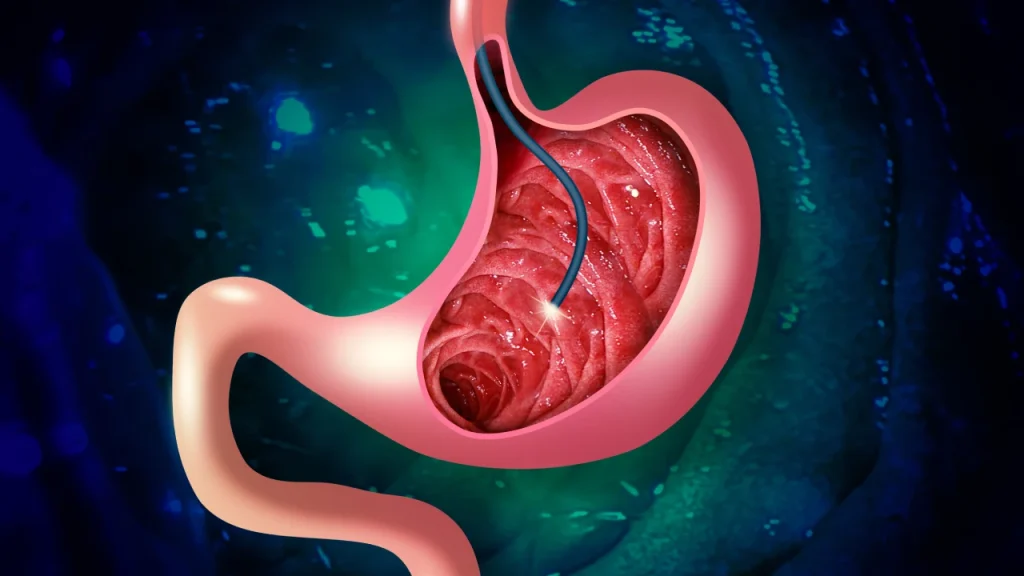
At an endoscopy clinic Singapore, one of the key strengths of gastroscopy is its ability to identify early gastric conditions that often produce minimal or non-specific symptoms. Conditions such as gastritis, gastric ulcers, and Helicobacter pylori infection can be directly visualised through the endoscope, allowing doctors to assess inflammation, erosion, or structural changes in the stomach lining with precision.
More importantly, early-stage gastric cancer may present as very subtle mucosal changes that are not detectable through symptoms alone and can easily be missed without direct examination. During a procedure at an endoscopy clinic Singapore, targeted biopsies can also be taken from suspicious areas for laboratory analysis, enabling definitive diagnosis. This combination of direct visual assessment and histological testing makes endoscopy one of the most effective tools for detecting gastric disease at an early, more treatable stage.
Detecting Early Pancreatic Conditions
Detecting pancreatic conditions at an early stage is particularly challenging, as the pancreas is located deep within the abdomen and early disease often produces few or non-specific symptoms. At an endoscopy clinic Singapore equipped with endoscopic ultrasound (EUS), however, clinicians are able to overcome many of these limitations. EUS combines endoscopy with high-frequency ultrasound to obtain detailed images of the pancreas from close range, allowing detection of small abnormalities that may not be visible on CT or standard ultrasound scans.
This includes early pancreatic tumours, small cystic lesions, and subtle signs of chronic or acute pancreatitis. In some cases, EUS also enables fine-needle aspiration (FNA) to obtain tissue samples for further analysis, which is crucial for confirming a diagnosis. Through these advanced capabilities, an endoscopy clinic Singapore plays an important role in identifying pancreatic conditions at a stage where treatment options are more effective and outcomes are significantly improved.
Who Should Consider an Endoscopy Clinic Evaluation
Not everyone requires advanced pancreatic or gastric assessment, but certain symptoms and risk factors should prompt consideration of an endoscopy clinic Singapore evaluation. Because early gastric and pancreatic conditions often present subtly, recognising these warning signs early can make a significant difference in diagnosis and outcomes.
You should consider an endoscopy clinic Singapore assessment if you have:
- Persistent upper abdominal pain that does not resolve or keeps recurring
- Unexplained weight loss without changes in diet or exercise
- Ongoing indigestion, bloating, or early satiety despite medication
- Loss of appetite that persists over time
- Black or tarry stools, or signs of gastrointestinal bleeding
- Chronic nausea or vomiting without a clear cause
Risk factors that may also warrant earlier evaluation include:
- Family history of gastric cancer or pancreatic cancer
- Long-term smoking history
- Chronic pancreatitis or recurrent pancreatic inflammation
- Long-standing diabetes, especially if newly worsening or difficult to control
- History of Helicobacter pylori infection or untreated gastric ulcers
In these situations, an endoscopy clinic Singapore provides a structured way to investigate underlying causes, helping to rule out serious disease or identify early changes that require prompt management.
What Patients Can Expect During the Process
At an endoscopy clinic Singapore, the procedure is typically performed on an outpatient basis and is designed to be safe, efficient, and as comfortable as possible. Most patients are able to return home on the same day after a short recovery period.
What usually happens includes:
- Fasting before the procedure to ensure the stomach is empty and visibility is optimal
- Pre-procedure assessment, where medical history and symptoms are reviewed
- Sedation administration, often given to help reduce discomfort and anxiety
- Endoscopic examination, which may include gastroscopy or endoscopic ultrasound depending on clinical needs
- Procedure duration of about 15–45 minutes, depending on complexity
- Short post-procedure monitoring, until the effects of sedation wear off
After the procedure, patients may experience:
- Mild throat irritation or bloating
- Temporary drowsiness from sedation
Most individuals recover quickly and can resume normal activities within the same day or the following day, depending on the type of procedure performed at the endoscopy clinic Singapore.
Conclusion
Early evaluation of pancreatic symptoms can make a significant difference in identifying conditions before they progress. Because gastric and pancreatic diseases often develop quietly, timely investigation is important when symptoms persist or risk factors are present.
An endoscopy clinic Singapore offers a focused way to assess the pancreas and clarify the cause of unexplained abdominal symptoms, supporting earlier diagnosis and appropriate next steps. If you are experiencing persistent digestive concerns or would like to discuss further assessment, you may book a consultation with our clinic, at:
Dr Lee Chin Li – Lee Surgery and Endoscopy | Colorectal Surgery | Gallbladder Surgery Singapore
6 Napier Rd, #04-16 Gleneagles Medical Centre, Singapore 258499
Phone: +65 6255 0720